3D Scanning Types: Complete Guide to Technologies & Services
3D Scanning Types: Complete Guide to Technologies & Services
3D scanning is widely used in manufacturing, reverse engineering, product design, and inspection workflows. Understanding different 3D scanning types helps engineering and manufacturing teams select the right technology, service level, and output format for their specific application.
This guide explains common 3D scanning technologies, types of 3D scanning services, and standard 3D scan file formats used in professional engineering environments.
What is 3D Scanning?
3D scanning is the process of capturing the physical shape of an object or environment and converting it into a digital 3D dataset.
The captured data can be used for:
- CAD modelling and design updates
- Reverse engineering
- Dimensional inspection and comparison
- Digital prototyping
- Manufacturing and tooling preparation
Depending on the workflow, final outputs may include point clouds, mesh models, or fully editable CAD geometry.
Types of 3D Scanning Technologies
Different 3D scanning technologies are selected based on object size, surface characteristics, required detail, and intended use of the data.
Structured Light Scanning
Structured light scanning projects light patterns onto a surface to capture geometry.
It is commonly used for:
- Small to medium-sized components
- Detailed surface capture
- Reverse engineering and design work
Structured light systems are widely used in engineering environments where surface detail is important.
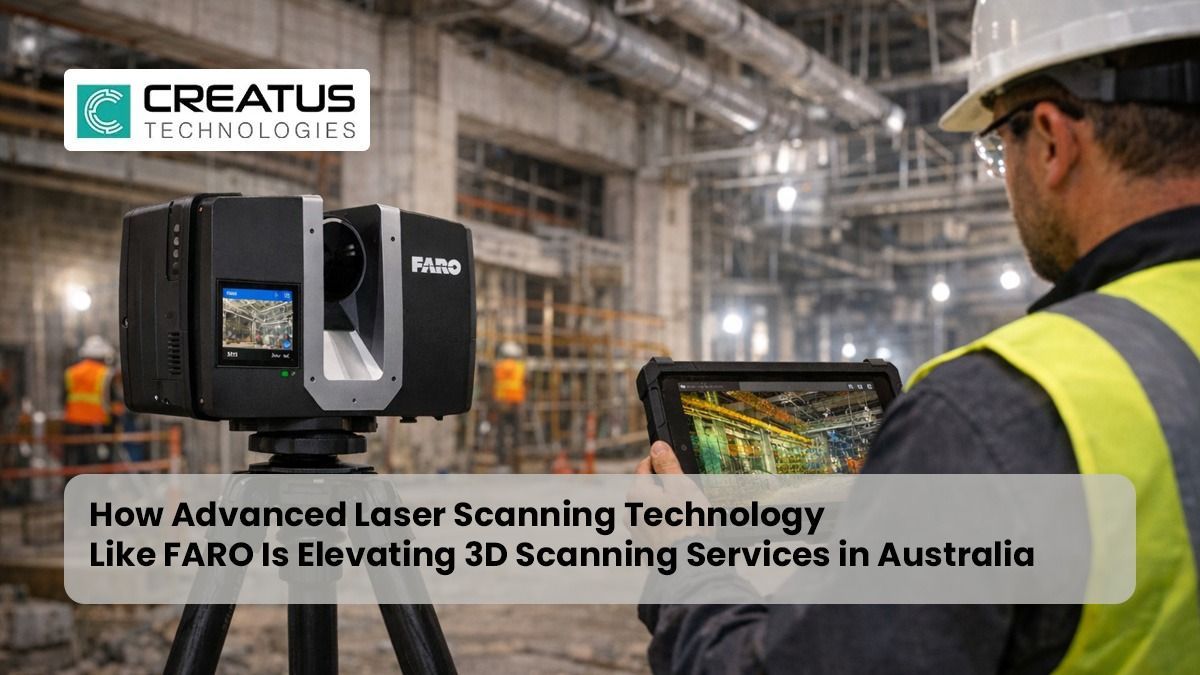
Laser Scanning
Laser scanning measures distances using laser beams to capture geometry.
It is suitable for:
- Larger industrial components
- Plant and equipment scanning
- Outdoor or harsh environments
Laser scanning is often used in mining, manufacturing, and infrastructure-related applications.
Photogrammetry
Photogrammetry creates 3D models using multiple photographs taken from different angles.
It is commonly used for:
- Large structures or assets
- Outdoor environments
- Applications where physical scanners are difficult to deploy
Photogrammetry is often selected for its flexibility and scalability.
Contact Scanning
Contact scanning uses a physical probe to touch and measure the object.
It is typically used for:
- High-precision inspection tasks
- Metrology and dimensional verification
- Controlled measurement environments
Contact scanning is slower but suitable for applications requiring physical point measurement.
Types of 3D Scanning Services
3D scanning services are structured around how the scan data will be used in engineering and manufacturing workflows.
3D Scanning Service (Raw Data Capture)
This service focuses on capturing physical geometry and delivering raw scan data.
Typical outputs include:
- Point clouds
- Basic mesh files
Common uses:
- Digital archiving
- Visual reference models
- Pre-processing for in-house engineering teams
Mesh Processing Service
Mesh processing converts raw scan data into clean, usable mesh models.
This includes:
- Noise removal
- Hole filling
- Mesh optimisation
Common uses:
- 3D printing
- Visual prototypes
- Simulation and visualisation
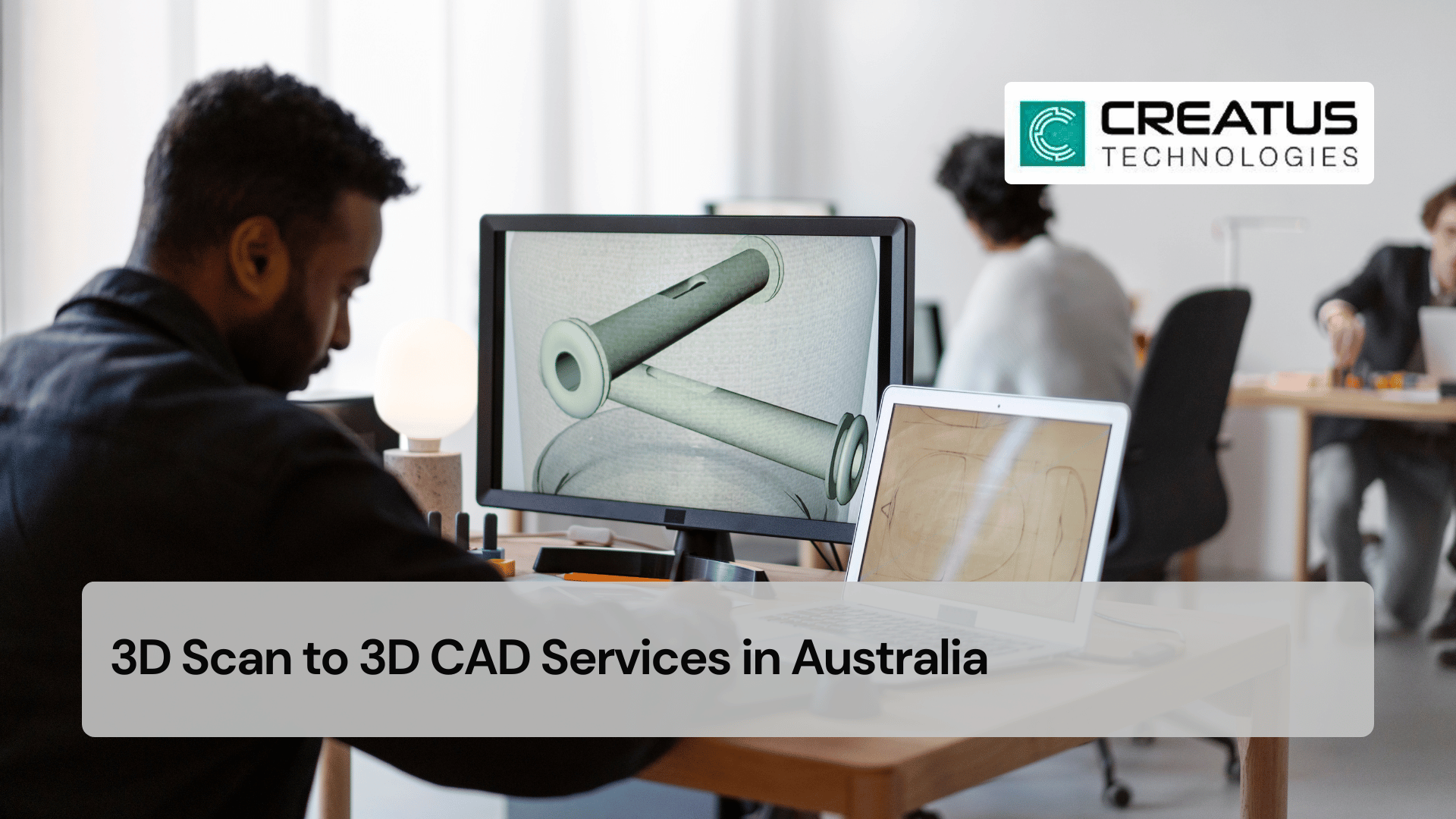
Scan-to-CAD Service
Scan-to-CAD converts scan data into fully editable, parametric CAD models.
This service is commonly used for:
- Reverse engineering of legacy or worn parts
- Design modification and improvement
- Manufacturing and tooling preparation
Scan-to-CAD supports integration into standard CAD and CAM workflows.
Inspection & Analysis Service
Inspection and analysis services compare scanned data against CAD models or nominal dimensions.
This is used for:
- Dimensional verification
- Manufacturing inspection
- Quality control processes
These services support engineering and QA workflows but do not replace certified inspection or regulatory sign-off.
Choosing the Right Type of 3D Scanning Service
Selecting the correct 3D scanning service depends on:
- Object size and complexity
- Required level of detail
- Intended use of the data
- Integration with CAD or manufacturing systems
Matching the scanning method and service type to the engineering outcome helps reduce rework and improves downstream usability.
Common 3D Scan File Types
Point Cloud Files
Raw datasets containing millions of measurement points.
Used for:
- Reference geometry
- Large-scale scanning projects
Mesh Files (STL, OBJ, PLY)
Surface models used for:
- Visualisation
- 3D printing
- Simulation
CAD & Surface Files (STEP, IGES)
Engineering-grade formats used for:
- Design modification
- Manufacturing
- CAM integration
The correct file format depends on whether the goal is visualisation, editing, or production.
Related Creatus Technologies Services
- 3D Scan to CAD
- Reverse Engineering
- 3D Scan Inspection
- Mechanical Design & Drafting
- Digital Prototyping
FAQs
- What are the main 3D scanning types?
The main types include structured light scanning, laser scanning, photogrammetry, and contact scanning. Each method is suited to different object sizes, environments, and accuracy requirements. - What is scan to CAD in engineering?
Scan-to-CAD is the process of converting 3D scan data into editable CAD models that can be used for design, manufacturing, and reverse engineering workflows. - When should 3D scan inspection be used?
3D scan inspection is used when comparing manufactured parts to CAD data or nominal dimensions for dimensional verification and quality control. - What file formats are best for engineering?
STEP and IGES formats are commonly used for engineering and manufacturing because they support editable geometry and CAD integration. - Is 3D scanning suitable for reverse engineering old parts?
Yes. 3D scanning is commonly used to capture legacy or worn parts so they can be recreated or redesigned using modern CAD systems.