What Is Mechanical Drafting? | Complete Overview
What Is Mechanical Drafting? | Complete Overview
What Is Mechanical Drafting?
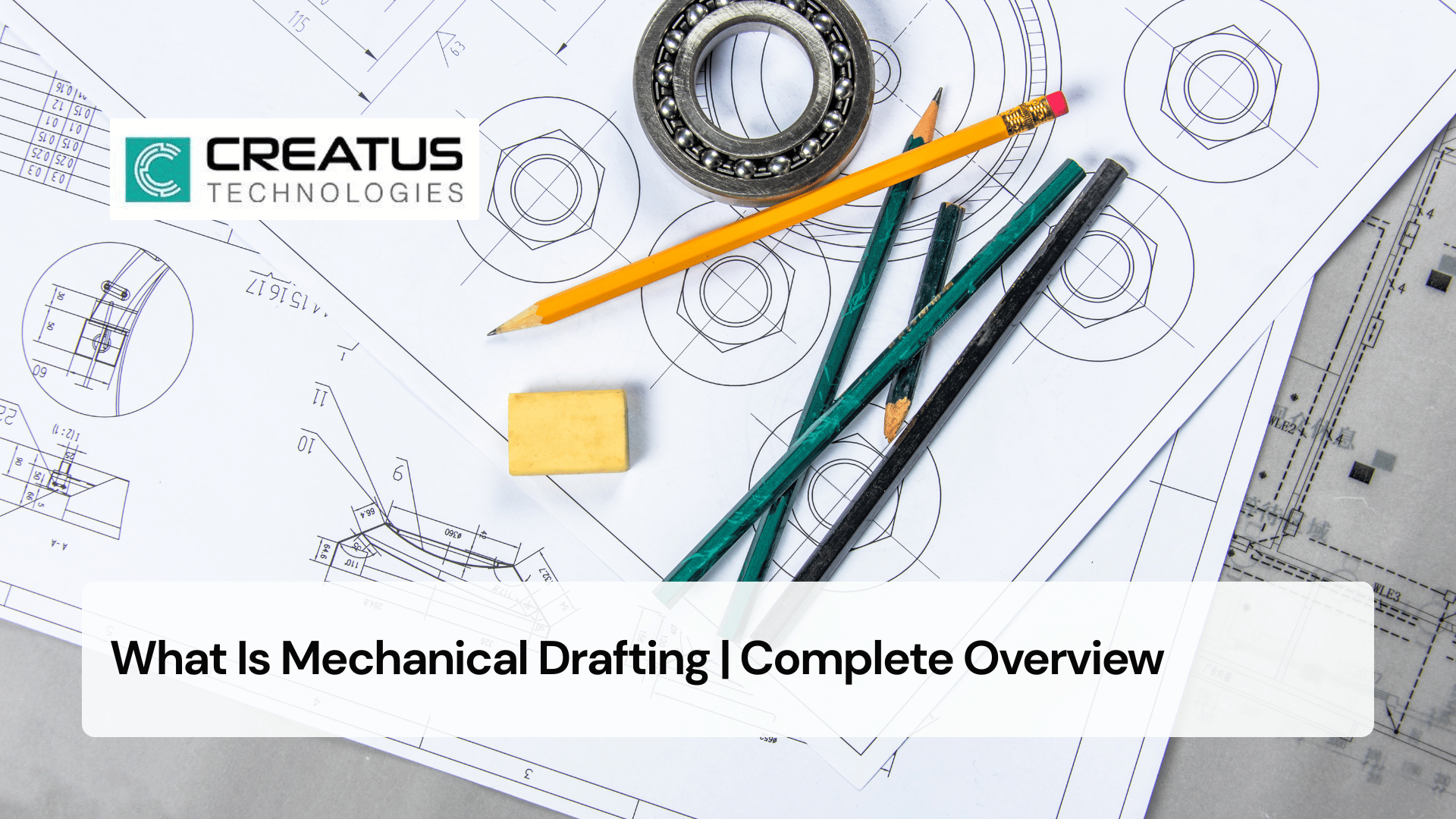
Mechanical drafting is the process of creating accurate technical drawings and CAD models that communicate how mechanical parts and assemblies are designed, manufactured, assembled, and maintained.
These drawings form the technical language between engineers, manufacturers, fabricators, and maintenance teams. They define geometry, dimensions, materials, and documentation requirements — helping ensure that design intent is clearly understood throughout the production lifecycle.
At Creatus Technologies, mechanical drafting supports engineering, manufacturing, inspection, and reverse engineering workflows across multiple Australian industries.
What Does Mechanical Drafting Involve?
Mechanical drafting focuses on producing structured technical documentation rather than engineering certification or approval.
Typical deliverables include:
- 2D detail drawings for individual components
- Assembly drawings and exploded views
- 3D CAD models for design reference
- Bills of materials (BOMs)
- Dimensioning and geometric annotations
- Drawing revisions and version control
These documents support fabrication, machining, fabrication, installation, and maintenance activities.
Who Uses Mechanical Drafting Services?
Mechanical drafting is used by:
- Mechanical engineers
- Manufacturing and production teams
- Maintenance and reliability engineers
- Fabrication and machining workshops
- Mining and heavy equipment operators
- Agricultural machinery suppliers
- Automotive and transport service providers
Drafting ensures technical consistency across departments and suppliers.
Mechanical Drafting Standards in Australia
Mechanical drafting in Australia commonly aligns with:
- AS 1100.101 – General Principles
- AS 1100.201 – Mechanical Engineering Drawing
These standards define:
- Line types and drawing conventions
- Dimensioning and tolerancing presentation
- Symbols and notation
- Projection methods
- Surface finish and welding representation
Creatus Technologies produces drawings that align with client-specified standards and commonly accepted Australian drafting conventions. Final engineering approval remains the responsibility of the project’s certified engineer.
2D and 3D CAD in Mechanical Drafting
Modern mechanical drafting uses CAD software to create:
2D Drafting
Used for:
- Manufacturing drawings
- Workshop fabrication documents
- Legacy system compatibility
- Simple components and layouts
3D CAD Drafting
Used for:
- Assembly modelling
- Design coordination
- Fit and clearance visualisation
- Scan-to-CAD and reverse engineering workflows
3D models are often supported by 2D drawings for manufacturing release.
How Mechanical Drafting Supports Reverse Engineering
Mechanical drafting is a key output of reverse engineering projects.
When components are scanned or measured, drafting converts captured geometry into:
- Parametric CAD models
- Manufacturing-ready drawings
- Assembly documentation
- Updated legacy drawings
This allows existing parts to be documented where original drawings are unavailable or outdated.
Internal reference:
Mechanical Drafting & Design Services (Creatus Technologies core service page)
When to Use Mechanical Drafting Services
Mechanical drafting is commonly required when:
- Manufacturing new components
- Modifying existing equipment
- Documenting legacy machinery
- Supporting maintenance and spares
- Preparing fabrication drawings
- Converting scans into CAD documentation
- Standardising drawing libraries
Mechanical Drafting vs Mechanical Design
Mechanical drafting focuses on documentation and communication.
Mechanical design focuses on engineering analysis and design decisions.
Creatus Technologies provides drafting and CAD documentation support. Engineering design approval and certification remain with the responsible engineering authority.
Frequently Asked Questions
What is mechanical drafting used for?
Mechanical drafting is used to create technical drawings and CAD models that communicate how parts and assemblies are manufactured, assembled, and maintained.
Are mechanical drafting drawings certified engineering documents?
Mechanical drafting drawings support engineering and manufacturing workflows. Final certification and regulatory approval must be provided by a qualified and authorised engineer where required.
What standards apply to mechanical drafting in Australia?
Common standards include AS 1100.101 and AS 1100.201, which define technical drawing conventions for mechanical engineering.
Can mechanical drafting be created from 3D scans?
Yes. Scan-to-CAD workflows can convert 3D scan data into CAD models and mechanical drawings for documentation and manufacturing support.
Do mechanical drafters design parts?
Drafters prepare documentation based on design intent. Engineering design responsibility remains with the project engineer unless otherwise contracted.